
Blog
Shri Siddhivinayak, Siddhatek: The Temple of Perfect Accomplishment

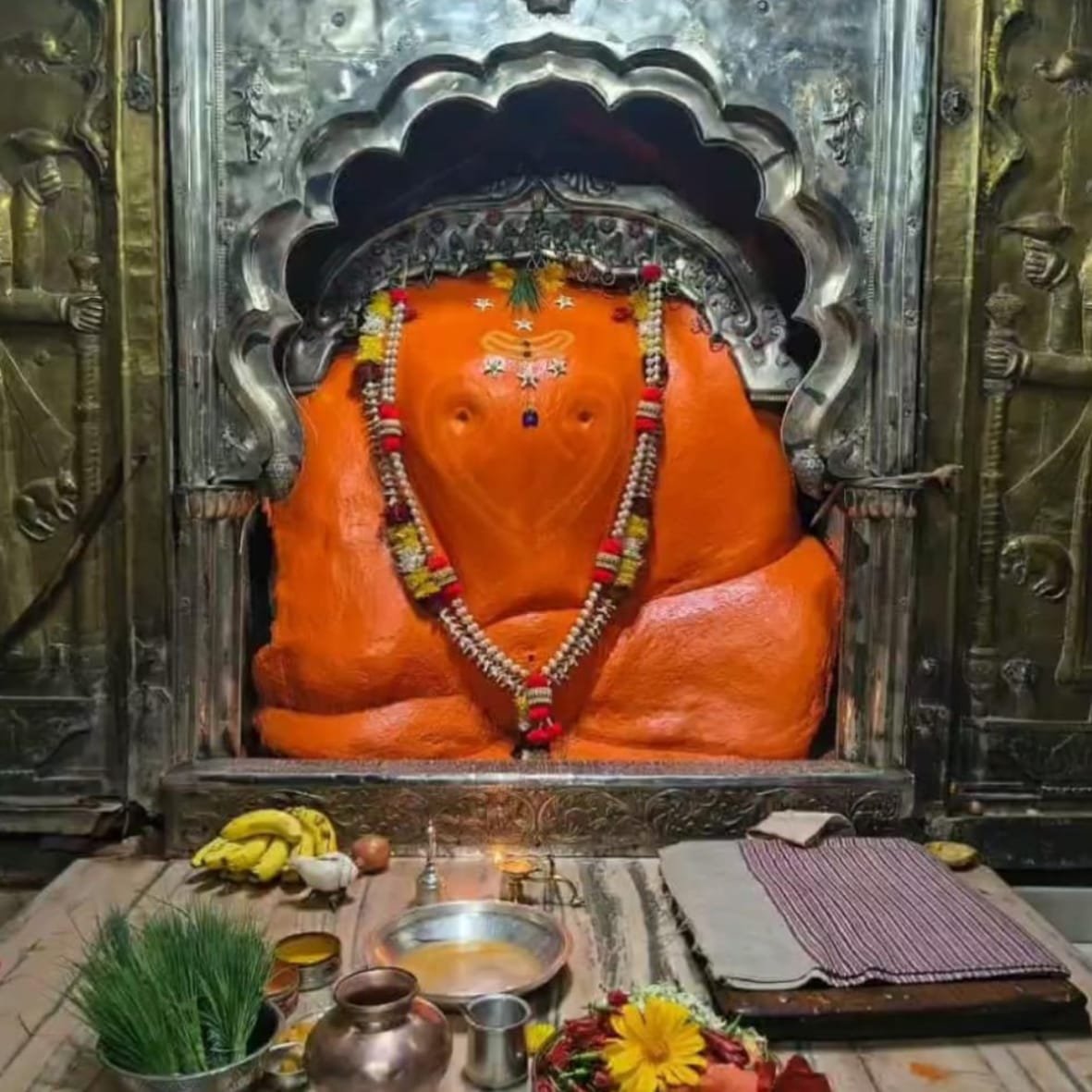
Nestled on a small hillock along the serene banks of the Bhima River, the Shri Siddhivinayak Temple at Siddhatek is a spiritual powerhouse, radiating an aura of ancient sanctity and immense power. It is not just another temple; it is a crucial stop on the revered Ashtavinayak Yatra, a pilgrimage to eight sacred Ganesha temples in Maharashtra.
What makes Siddhatek’s Ganesha truly unique and exceptionally potent is a single, distinctive feature: His trunk is turned to the right.
This post is your guide to understanding the profound history, mythology, and spiritual significance of this sacred site.
✨ The Legend: Why Lord Vishnu Worshipped Ganesha Here
The Mudgala Purana narrates the foundational legend of Siddhatek. During the dawn of creation, Lord Brahma was engaged in the cosmic task of building the universe. From the earwax of a sleeping Lord Vishnu, two formidable demons, Madhu and Kaitabha, emerged. They began to terrorize the cosmos, disrupting Brahma’s work and threatening the very fabric of existence.
Despite a prolonged battle, Lord Vishnu could not defeat them. He sought the counsel of Lord Shiva, who advised him that he had forgotten to invoke the “Remover of Obstacles,” Lord Ganesha, before starting his fight.
Following this advice, Lord Vishnu retreated to the hillock of Siddhatek. Here, he performed intense penance and worshipped Ganesha with utmost devotion. Pleased, Lord Ganesha appeared, bestowed his blessings, and granted Vishnu the siddhi (divine power or accomplishment) needed to vanquish the demons.
After his victory, Lord Vishnu consecrated an idol of Ganesha on that very hill. Because this is the place where Vishnu attained siddhi, the Ganesha here is known as Siddhivinayak, the “Bestower of Accomplishment and Success.”
🐘 The Unique Idol: The Right-Trunked Ganesha
The central idol at Siddhatek is the heart of its power.
Swayambhu: Like all Ashtavinayak idols, this one is swayambhu, or self-manifested, believed to have emerged naturally from the earth.
The Right Trunk (Dakshinabhimukhi): This is the temple’s most defining feature. A Ganesha idol with its trunk turned to the right is called a “Siddhi-Vinayaka.” Such idols are considered “jagrut” (awake) and extraordinarily powerful, but also very demanding. Devotees must follow rituals with strict purity and devotion.
The Idol’s Appearance: The idol is 3 feet tall and 2.5 feet wide, facing north. The idol’s stomach is not wide, and Riddhi and Siddhi (goddesses of prosperity and spiritual power) are seated on his laps.
🏛️ Temple History and Architecture
The temple’s story is as old as mythology, but its physical structure has evolved over centuries.
Ancient Origins: The original temple is believed to have been built by Lord Vishnu himself. Over time, it was lost.
Rediscovery: Legend states that centuries later, a cowherd from the region noticed one of his cows was automatically lactating over a specific spot on the hillock. Upon clearing the area, he rediscovered the sacred swayambhu idol.
The Current Structure: The present temple was built in the late 18th century by the devout queen Ahilyabai Holkar of Indore, who was renowned for rebuilding and restoring hundreds of temples across India.
Temple Layout: The temple is a classic black stone structure. The main sanctum (garbhagriha) houses the idol, flanked by brass statues of Jaya and Vijaya (the gatekeepers of Vishnu’s abode). The main hall (sabha mandap) was added later by Sardar Haripant Phadke, a commander in the Peshwa army.
🙏 A Pilgrim’s Guide: What to Expect on Your Visit
A visit to Siddhatek is as much a scenic retreat as it is a spiritual journey.
Key Rituals for Devotees
The most unique and important ritual at Siddhatek is the pradakshina (circumambulation). Devotees don’t just walk around the temple; they are required to walk around the entire hillock.
Important: This pradakshina is a 5-kilometer walk, which can take 30-45 minutes. The path can be uneven, so it’s best done in the early morning. It is believed that completing this circumambulation fulfills all wishes.
Major Festivals
While the temple is always bustling, it comes alive during:
Ganesh Chaturthi: Celebrated with grand pomp and splendor.
Ganesh Jayanti: (Magha Shuddha Chaturthi) This is the celebration of Lord Ganesha’s birth.
Vijayadashami & Somavati Amavasya: These days also see large fairs and special pujas.
📍 Travel and Visitor Tips
Location: The temple is in the Karjat taluka of Ahmednagar district, Maharashtra, on the northern bank of the Bhima River.
How to Reach: The nearest major railway station is Daund (approx. 19 km). It is well-connected by road from Pune (approx. 100 km) and Ahmednagar.
Best Time to Visit: The winter months (October to March) are the most pleasant. Summers can be very hot.
Visitor Etiquette:
Dress modestly, covering shoulders and knees.
Photography is usually not allowed inside the main sanctum.
Avoid Sundays and festival days if you dislike large crowds. The temple is known for being serene and peaceful on regular weekdays.
Accommodation: Accommodation options are limited in the small village of Siddhatek. Many devotees prefer to stay in Daund or make it a day trip from Pune. The temple trust has a Bhakta Niwas (pilgrim’s rest house) with basic facilities.
A pilgrimage to Siddhatek is a journey to the source of siddhi itself. It’s a place to pray for success, not just in worldly matters, but in the spiritual quest for perfection. The right-trunked Ganesha of Siddhatek waits to bless the truly devout with the ultimate accomplishment.
Ganpati Bappa Morya!
Would you like me to help you plan a route for the complete Ashtavinayak Yatra, starting from a specific city like Pune or Mumbai?